


Every lawyer has an origin story. In the case of Ryan Ejim, a first-year associate at Toronto’s Massey LLP, the opening scene takes place about 10 years ago. Picture a young man in his early 20s. He’s big, 6-foot 7-inches tall, and he has just achieved his goal of playing pro basketball. Years of growing up in Rexdale and Brampton, slogging it out in cross-town pickup games, followed by success on the court in college and university, have led him to a contract with a first-division team in Portugal. Young Ejim is about to start living his dream. And in his very first game, he fractures his knee.
All those years of playing on asphalt courts have caught up with him. The doctors tell him his patellar tendon looks like “an old shoe.” Despite a contract he thought would protect him in the case of injury, his team washes its hands of him. So do others that Ejim thought were in his corner.
Looking back on that day, Ejim admits, “It was devastating.” But it was also instructive. It was a lesson in the eternal truth that in professional sports, a system built on the talents of professional athletes, the athletes themselves are essentially on their own.
The next time it happened to Ejim, he was more prepared. Though he recovered from his injury and returned to international play, he put thought into his life after basketball and applied to law school. In 2020, while he was playing pro ball in Spain, the COVID-19 pandemic hit, which allowed him to attend Osgoode Hall law classes online, studying while everyone else in Spain was taking their siesta. When he got injured again, his knowledge and determination were tested. “The team president and the coach didn’t speak a lick of English,” Ejim remembers. “So I had to speak legal, contractual terms and negotiate my buyout with my team in pure Spanish, by myself.”
The stories of current and former pro athletes being left to fend for themselves, exploited or victimized by the people they thought they could trust are, we know, legion. In Florida, Jeffrey Rubin was barred from the securities industry in 2013 after costing some 31 NFL players about US$43 million on a suspect investment. In Houston, a woman named Peggy Ann Fulford sold herself not just as a financial advisor but as someone who wanted to protect rich players from losing their money. After she gained access to their bank accounts, she raided them to buy herself luxury cars, jewelry and real estate. In 2018 she was sentenced to 10 years in prison.
Even family is no substitute for proper advice. Back in 2011, the parents of Columbus Blue Jackets defenceman Jack Johnson were involved in borrowing about US$14 million against their son’s future earnings. He was ultimately forced into bankruptcy.
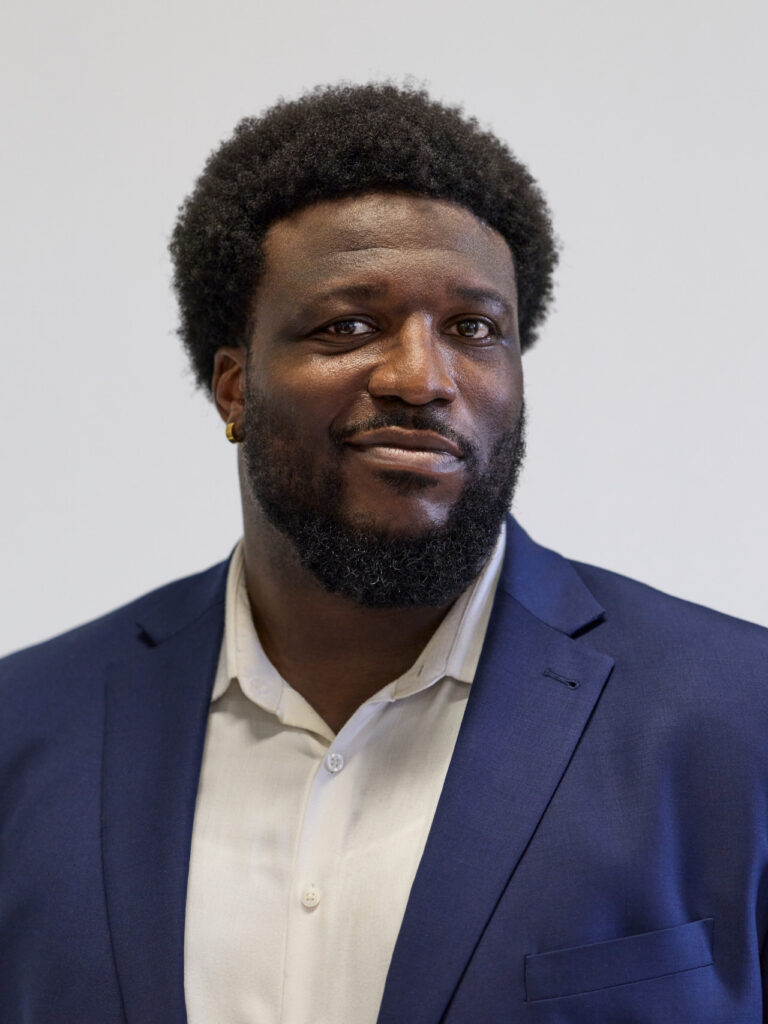
Ryan Ejim
Associate, Massey LLP
In all of these cases, and scores of others, players have been victimized or abandoned by the people they thought they could rely on. And the problem doesn’t end with the cessation of players’ athletic careers. In many ways the dangers increase. Players turning to business ventures to maintain their stature and lifestyle are vulnerable to smooth-talking sharks.
Why are they vulnerable? As a former pro athlete who has seen and heard the stories, Ejim, now 32, understands better than most. “The money that was flowing is no longer flowing, and you are still looked at as the man,” he says. “You need to get things done.” A player will be approached by people who know him. They’ll tell him he needs to be a leader in the community, to support causes and friends with his name and his money. “Ain’t you one of us?” they’ll say. “That puts pressure on you,” says Ejim, “to deal with people who are unscrupulous.”
Having identified the problem, Ejim decided he wanted to be part of the solution. What these athletes and ex-athletes needed was the help of a fiduciary, someone obligated to act in their best interests. After articling with McMillan LLP, he looked for a way to start his own practice. A wise mentor advised him to find a boutique firm that welcomed his unique awareness and experience. Toronto’s Massey LLP, a nine-lawyer firm focused on higher net-worth individuals and small corporations, seemed a good fit.
Ejim went to Massey and made his pitch. “I said, ‘Look, there’s an untapped market here that few lawyers see, and I’m seeing it because I lived it.” The rise of money in sports, including in college ranks, was leading to more and more Canadian athletes coming home with money in their pockets, hoping to start a business, buy real estate or invest in a franchise, and having no idea how to protect themselves.
The Massey brain trust, including partner Frank Portman, grasped the opportunity. “As we were talking about it,” says Portman, “it became clear that this is a market where people need guidance. These are people who have to make a pivot in their career to what’s next, and no one was really looking at it from this perspective.”
Perhaps the biggest hurdle when launching a new practice is establishing trust with prospective clients. That can be even harder for a young lawyer, which is why it’s so rare for a first-year lawyer to take on the challenge. But Ejim is different. “He’s kind of ahead of the curve on that,” says Portman. “He brings the knowledge of what these individuals are going through.”
He also brings the ability to talk straight to people who have been praised and admired all their lives. Star athletes have an aura that can be awe-inspiring. But not for Ejim. Not only did he succeed in the world of pro basketball, he grew up with four siblings who were all star athletes. “Very few players are going to be able to get me googly-eyed,” he says. So, while friends and family members whisper blandishments into an athlete’s ears, Ejim can deliver hard truths. “I’m going to tell you, ‘Those two guys, they got to go. They’re not good for you. This is a silly business deal.’” He sees his role with a client very clearly: “I’m going to be the voice of reason.”
In these early days of building his practice, Ejim is starting with clients who knew him in his playing days. One of them is Taévaunn Prince, who grew up playing basketball with Ejim’s older brother, Melvin. A former first-team all-American basketball player who led the second division of the NCAA in scoring, Prince had a globetrotting pro basketball career that saw him play in Europe, Africa and South America. He’s now working as a real estate capital advisor at Bay Hill Financial, a Toronto-based mortgage brokerage. He’s also a co-founder of Basketball Politics, an athlete-development consulting firm. “I’ve known Ryan since I was 13,” he says. He lists Ejim’s attributes: “Very patient, very knowledgeable, pays attention to detail, very professional. If he says he’s calling at 2 o’clock, he’s calling at 2 o’clock.” And like a player who seeks the toughest competition, “He’s always looking to educate himself.”
Ejim has set goals for his practice, and those goals relate directly to the success of his clientele. Think of George Foreman, who made more money from his grill than he ever did as a boxer. “That’s my ideal client,” says Ejim. Shaquille O’Neal is another. Or the late Junior Bridgeman, an NBA player who was never a star, but who became a billionaire owner of Wendy’s, Chili’s and Pizza Hut franchises.
Ejim believes that too many players make it to the pros and think they’ve reached the height of their success. “No,” he says. “This is the beginning. You can do so much more.” You just need the right person on your side.
Photography by Finn O’Hara.